AugmentrART
The problem
Most AI art tools take control away from the artist. The platform holds the work, the data, and the terms. The artist gets output, not ownership.
What I built
AugmentrART is an interactive AI art platform built around human creative control and data sovereignty. Makers create and run interactive pieces, keep ownership of their work and data, and publish on their own terms. A subscription model with free and paid tiers is designed and in preparation. It is not yet launched.
Architecture
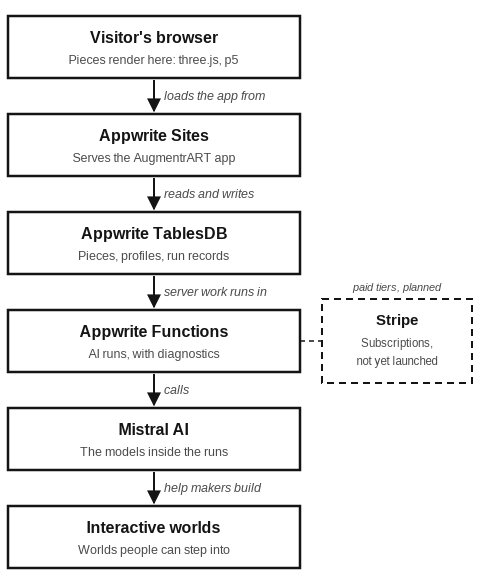
The platform runs on Appwrite as its only backend: Sites serves the app, TablesDB holds the data, and Functions carry the server work. Each AI run writes a diagnostics record, so I can read what a run did after the fact. Pieces render in the visitor's browser, in three.js for 3D scenes and p5 for 2D scenes, so a published piece runs on the reader's machine and not on a render server. Mistral models do the AI work inside the runs, and Stripe is the chosen payment provider, with the subscription tiers designed and in preparation, not yet launched.
Design and taste
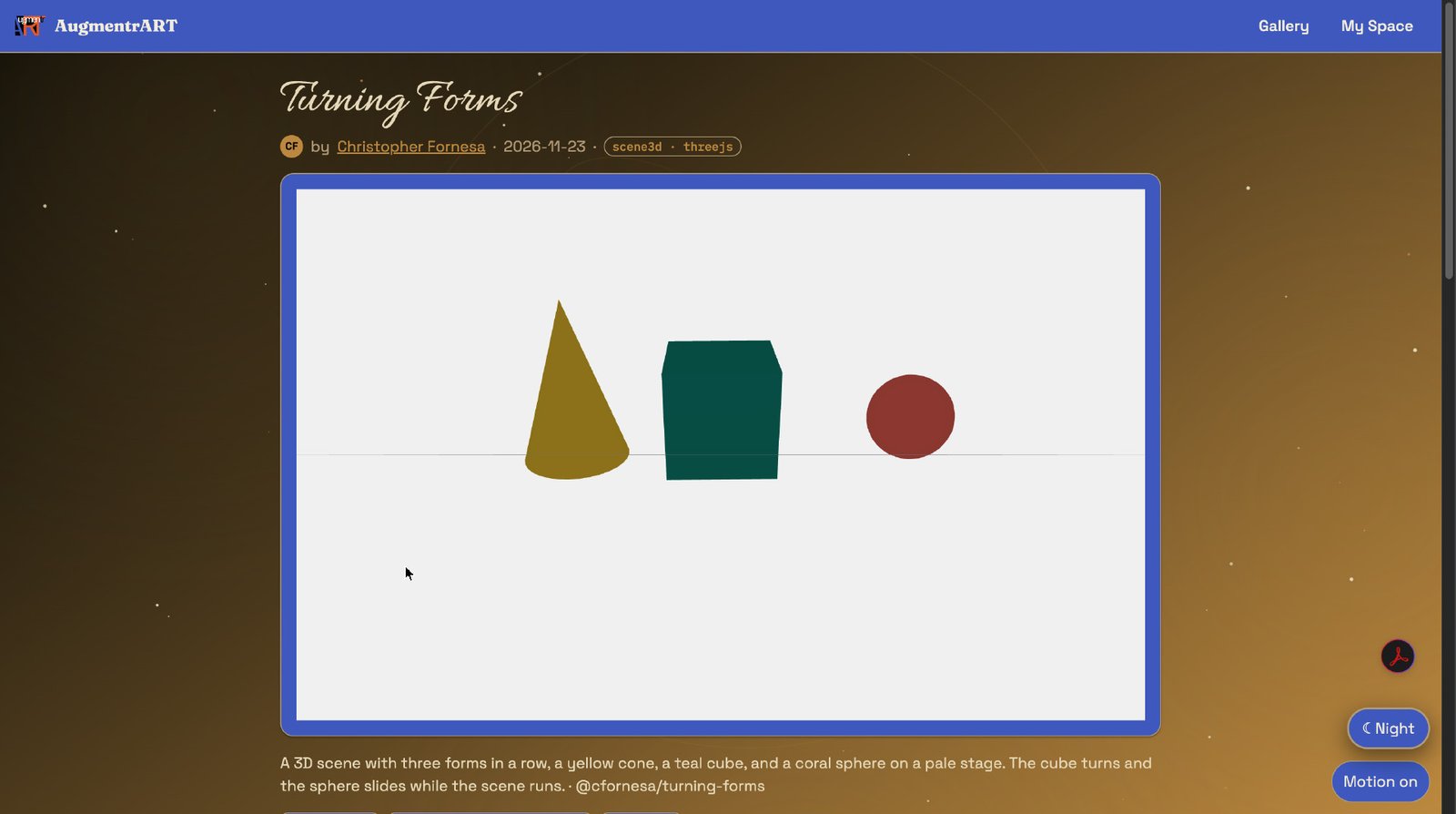
The frame stays quiet so the work carries the color: a night field, plain cards, and each piece title set in a script face. Every piece carries a plain-word description of what it shows, written for visitors who cannot see the canvas, and pieces can be reordered from the keyboard. The deeper choice is structural. A maker's profile, pieces, and data stay the maker's own, and publishing happens on the maker's terms, because I designed the platform around data sovereignty rather than adding it later.
AI tools and my direction
I direct the build in lanes. Claude Code holds the planning, the design, the architecture, and the written record, including the decision records that govern the build. Codex implements in its own branch, one lane at a time, and merges only after my sign-off. Nothing reaches production on a runner's word: I check the branch, the file list, and the live build myself, and a lane closes only when its issues close. The documents and the code grow together, and a ruling lands in the record when it is made.
Stack
TypeScript, Appwrite (Sites, TablesDB, and Functions), Mistral AI, Stripe subscriptions.
My role
I designed and directed AugmentrART. It was built with agentic coding tools under my direction: architecture, sequencing, and acceptance were mine.